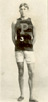

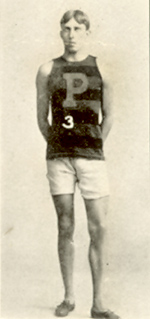
Irving Knott Baxter '99
Grad Year
1899
Sport
M Track & Field
Decade
1800s
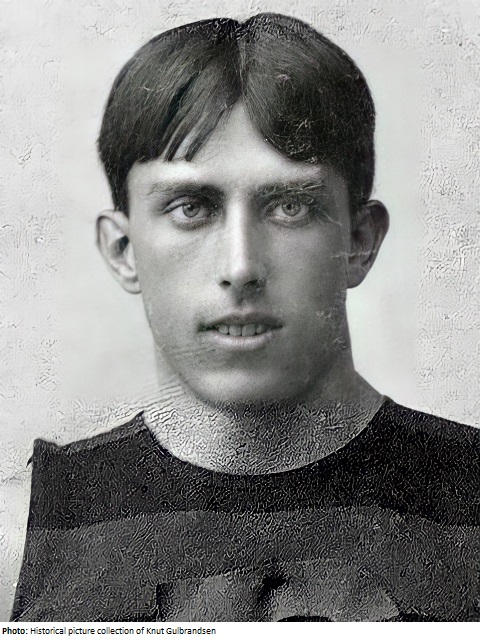
Trinity sports historian, Robert Morris, called him “Trinity’s outstanding track athlete during the first three decades of the sport.” Born in 1876 in Utica, New York, Irving Knott Baxter arrived at Trinity in the fall of 1895 as the New York State high jump champion. He immediately made an impact at the college, becoming the team’s top point scorer and leading the Trinity track team to victory over Wesleyan in a dual meet. He would go on to win the New England high jump championship in 1897, setting a New England record in the process. Baxter then finished second in the collegiate national championship, the first Trinity athlete to earn a place in the prestigious competition since it was started twenty years earlier. His leap of 6 feet 1 inch would stand as a Trinity record for 35 years, until Luke Kellam broke it by three quarters of an inch in 1932.
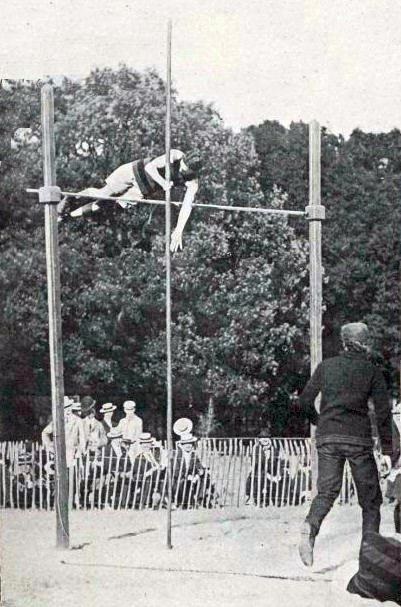
Moving on from Trinity to Penn Law School, he kept competing, winning the college national championship in the high jump in 1899. In the summer of 1900, he traveled to Europe, winning the British championship in the high jump, and then to Paris for the 1900 Olympics, where he took gold medals in the high jump and pole vault and silver medals in three standing jump competitions. His five Olympic medals earned him a tie for most medals in track & field. Irving Knott Baxter practiced law in Utica, served as a city judge, was active in the Democratic party, served in World War I, and died in 1957 in Utica, where he is buried at the Forest Hill Cemetery.
The Early Years
Irving Knott Baxter was born on March 25, 1876, in Utica, New York, the son of John Rechab Baxter, a civil engineer, and Minnie Knott Baxter. John R. Baxter could trace his family’s roots back before the American Revolution. On his mother’s side, according to his application to the Sons of the American Revolution, he could trace his lineage back to Moses Ramsdale, a teenage drummer boy in a Massachusetts militia. Minnie, for her part, was a more recent immigrant, her father being born in England and her mother from Scotland. Irving was the second of eventually seven children, six boys and one girl.
[One writeup on Irving Baxter at a website called “Olympedia” claims that he was the brother of Hugh Baxter, American pole vault champion from 1883 to 1886, but this is false. Despite the common name, Irving’s only older brother was John R. Baxter Jr., and John Sr. and Minnie were far too young to produce a son that was winning the pole vault in 1883.]
Baxter attended local public schools and graduated from the Utica Free Academy in 1895, according to the Penn website. In June 1894, he won the state YMCA athletic games in the high jump.
The Trinity Years
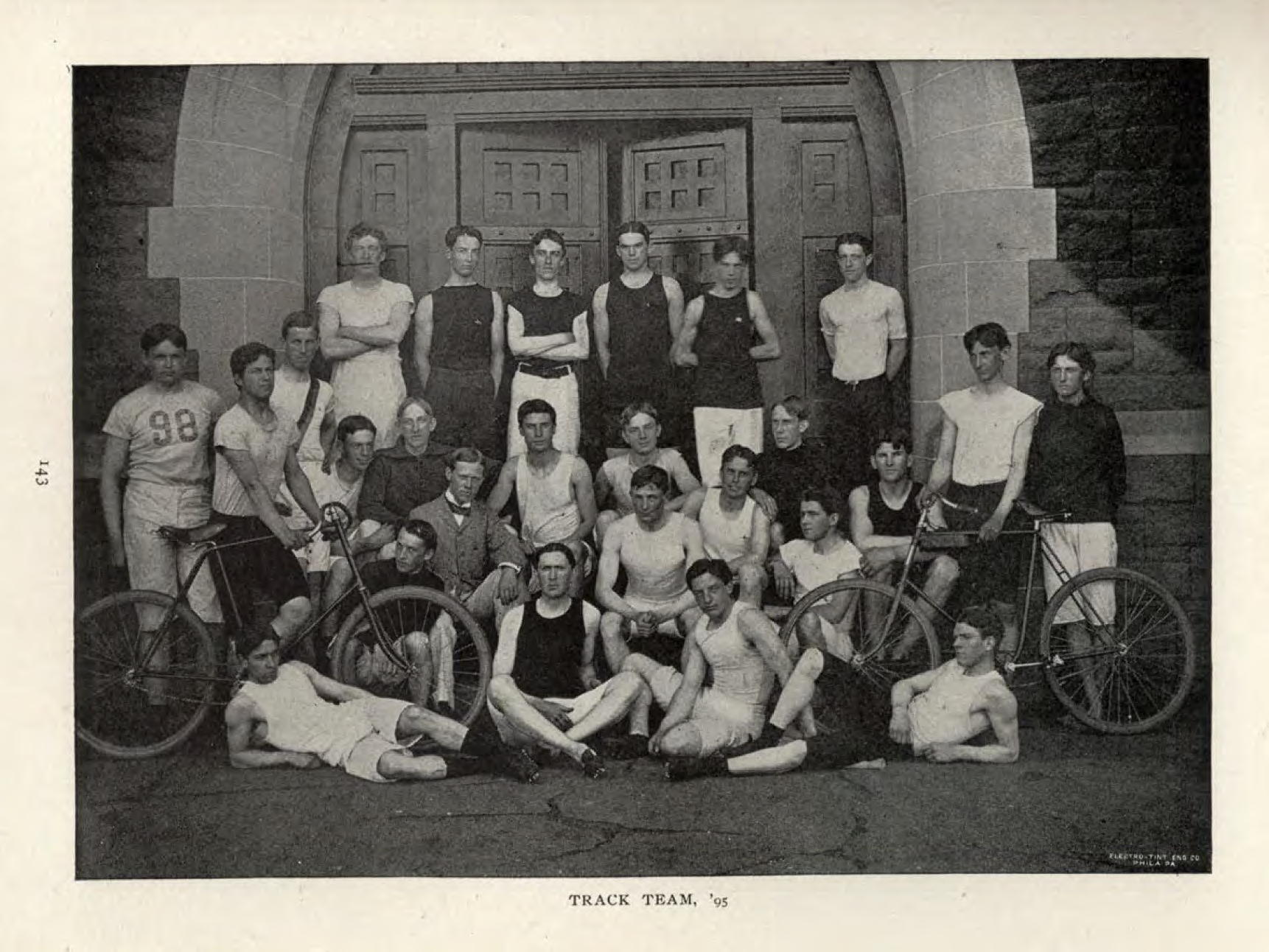
Baxter arrived at Trinity in the fall of 1895 and immediately established new college records in the running high jump, the standing high jump, and the high kick. His high jump mark of 5 feet 9½ inches eclipsed the previous mark by nearly six inches.
The winter meeting of the Trinity Athletic Association, an intra-college competition, held in March 1896, was described by the Trinity Tablet as “the best ever held at Trinity.” Baxter won the Record Cup for most points earned but failed to win the meet’s top prize. “Despite the fact that Baxter won the most events, it was decided by the judges that the McCracken Cup for the best all around athlete should go to Woodle,” reported the Trinity Tablet on March 28, 1896, “as he showed proficiency in events of a more dissimilar character than did Baxter, whose work in the jumps and high kicks was very brilliant.” The fact that Baxter was just a freshmen, and that Allan Sheldon Woodle Jr. was a standout athlete and eventual football captain, also likely played a part in the decision.
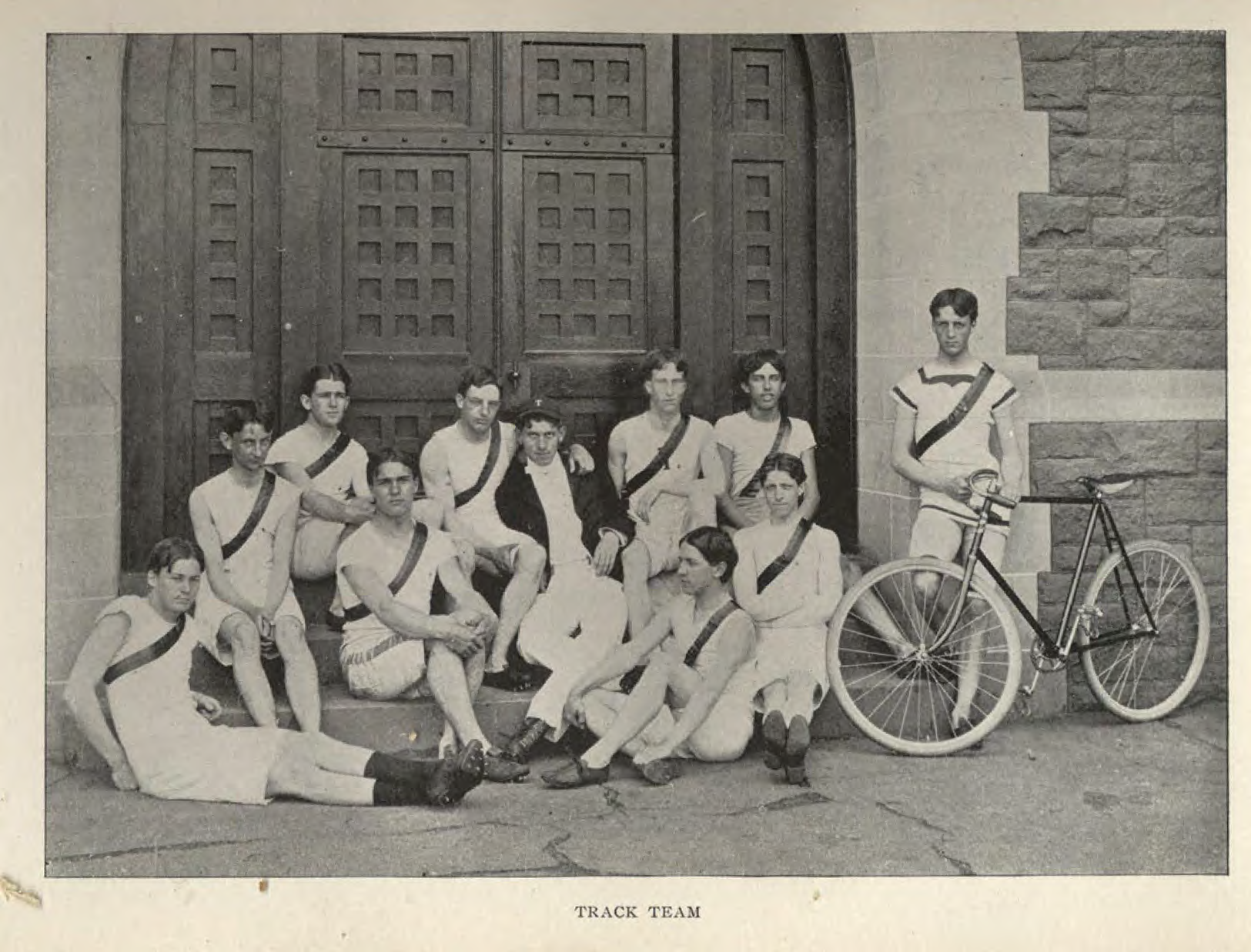
In May of 1896, Trinity arrived at the newly built Crystal Lake Park in Middletown for its sole dual meet against Wesleyan. Dual meet competition had only started the year before, when Trinity lost to Wesleyan at home. The Trinity student newspaper, the Trinity Tablet, was hardly enamored with the new Cardinal track facility, complaining that it was nearly two miles from the train station and hardly in top form. “The track might, with some small exaggeration, be designated a stone pile packed with sand,” the newspaper wrote on May 19, 1896, “and the times were correspondingly slow.”
Baxter played his part, winning the high jump, the broad jump, the 120 yard high hurdles, and placing second in the pole vault. But the winner of the dual meet would ultimately be determined by the final race, the 220 yard high hurdles. Trinity’s William Albert Sparks was a fast sprinter and quickly ran out to an early lead, on his way to an easy victory. If Trinity could also place second in the race, they would win the dual meet. If not, it would be a long walk back to that train station. Fighting for second place was Baxter from Trinity and North from Wesleyan. As the 1897 Trinity yearbook reported:
Until the last few hurdles were reached, they were neck and neck, then Baxter slowly crawled ahead and with an effort that took every remaining ounce of strength cleared the last hurdle and sprinted across the tape ahead. With a wild howl, the crowd rushed out on the track and before Sparks and Baxter a chance to stop running they were caught up and rushed away to their quarters amid a perfect storm of cheers.
Three months later, Baxter won the New England championship in the high jump, setting a new New England record at 5 feet 9 ¾ inches.
The following year, 1896-1897, Baxter continued his winning ways, earning both the Record Cup and the McCracken cup for his performance at the intra-college track meet in March 1897. He also set a new college record in the high jump at 5 feet 11 ¼ inches.
A month later, however, in April 1897, fate turned against the star track athlete. “Trinity’s hopes for a star athletic team have gone down well below par,” reported the Hartford Courant on April 19, 1897. “The cause of the bearish movement is the suspension of Irving K. Baxter, the star athlete of the college, by the faculty because of marks.”
The suspension was not permanent, and Baxter would be allowed to return for the New England championship in Worcester, Mass in late May, but it would mean he would miss the dual meet against Wesleyan, drawing ire from the student boy. “Naturally, the students are much displeased with events and have been raining petitions on the faculty to remove or at least commute Baxter’s sentence,” reported the Harford Courant. “The faculty, however, have stood firm and refused to grant the petitions on the grounds that Baxter deserved his sentence and that the fact that he was prominent in athletics could not be considered an extenuating circumstance.”
As it was, the Trinity-Wesleyan dual meet did not take place due to a dispute over point scoring. Trinity would not likely have fared as well as the previous year. In addition to Baxter’s absence, Elton Littell, another star track athlete, was out due to an eye injury.
Baxter’s suspension ended on May 22, 1897, the day of the New England Championship at Worcester. “Baxter has been unable to do any training and will have a hard time to win the high jump from Prouty, the Williams freshmen,” reported the Hartford Courant on the day of the race. In the end, Baxter “won the high jump very easily,” reported the newspaper, “but was not in the best form and so could not beat his record.”
Just weeks later, Baxter headed to New York to compete in the intercollegiate national championship. It was reported that he would need to jump over 6 feet just a qualify in the high jump, a height he had never yet achieved. At the race held at the Berkeley Oval in Manhattan, with 1,500 fans in attendance, Baxter jumped a height of 6 feet, earning him tied for second with three other jumpers from Harvard, Yale, and Princeton. J.D. Winsor Jr., from Penn, won the high jump with a record leap of 6 feet 3 inches. In the jump off for medals, Baxter earned third place with a leap of 6 feet 1 inch. It was the first time Trinity had earned at medal at the event since it was started twenty years earlier.
A week later, on June 22, 1897, Irving Baxter was elected captain of the 1897-1898 Trinity track team. However, he would not be returning to Trinity, electing instead to enroll at the University of Pennsylvania law school. At the time, law schools required only a high school diploma, and it was not unusual for undergraduates to leave college early to embark on a legal degree. It would take several decades before law schools became graduate programs. It was also fairly common for the college to accept the law school credits, and grant degrees, as Trinity did with Baxter, who graduated with the class of 1899. Whether it was his suspension that played a part, or the fact that Penn had the best college track team in the country, Baxter was on his way to Philadelphia.
Olympic Champion
Baxter’s winning ways continued at Penn, and he won the 1899 intercollegiate championship in the high jump with a leap of 6 feet 2 inches. Second place went to W.C. Carroll of Princeton with a jump of 6 feet. Baxter also won several national Amateur Athletic Union (AAU) championships, and had clearly established himself as the best high jumper in the nation and soon, the world.
In the summer of 1900, Baxter set sail with other top American track athletes to head to Europe to compete against the best the world had to offer. Their first stop was in London for the British Amateur Athletic Association (BAAA) championships. “England Scours the World for Athletes to Beat Us,” announced the Boston Globe on July 8, 1900, “BUT YANKS WIN.” American athletes, many of them college athletes, dominated the competition, winning eight of the thirteen events. Baxter’s achievement was especially noteworthy, along with some others. “Irving K. Baxter, of the University of Pennsylvania, cleared the bar in the high jump four inches higher than his nearest competitor,” reported one newspaper, “and little Bascom Johnson of Yale sailed through the air in the pole vault at a height that none of the others could hope to reach. His best vault was 11 feet 4 inches.” Baxter’s winning height was the same as his intercollegiate championship a month before, 6 feet 2 inches.
From London, the American team made its way to Paris for the 1900 Olympic Games, to be held during the 1900 World’s Fair. It was just the second Olympic games since the first one held in Athens four years earlier, although few used the word “Olympics,” describing it instead as the “world’s amateur championships.” More than 1,200 athletes descended on Paris to compete in nineteen different sports, including the first female athletes.
As in London, Americans dominated the track & field competition, earning 39 total medals, more than four times second place Great Britain, who earned just eight. Five of those medals were won by Irving K. Baxter. “He easily retained his reputation,” wrote the New York Times on July 16, 1900, in referring to Baxter in the high jump, “winning first place with 190 centimeters [nearly 6 feet 3 inches]. He made an effort to clear 197 centimeters [approx. 6 feet 5 inches], the world record, but was unsuccessful.” Baxter also earned the adulation of the crowd. “During his efforts, all the spectators swarmed about the space in which the jumping was going on, and gave vent to the greatest enthusiasm,” reported the New York Times.
The games, however, became mired in controversy when race officials announced that competition would take place on a Sunday. Many of the American college players objected to or were prevented from competing on the Sabbath, often due to college rules. Originally, the competitors were told they could compete on the following Monday, but then race officials changed course and announced that all scheduled races would conclude on Sunday. “Yankees Barred,” declared a New York Times headline. “All the teams entered for the Championships sign a protest against action of the Game’s officials.”
Most of the colleges refused to compete on Sunday, with the sole exception of the University of Pennsylvania. “College men who were prevented from competing Sunday by the change in the agreed, or at least understood, arrangements, feel none too kindly toward the representatives from the University of Pennsylvania for contesting” wrote the New York Times on July 17, 1900. “They claim that if Pennsylvania had remained out, concerted action might have brought about a modification.” At times, the dispute tuned physical. After winning the long jump competition on Sunday, Penn’s Alvin Kraenzlein was allegedly punched in the face by his rival, Meyer Prinstein, who was prevented from competing in the final by officials from Syracuse University.
The absence of several college athletes made little difference in the high jump, where Baxter had proved in London that he was clearly the world champion. The only prominent jumper to sit out was W.C. Caroll of Princeton, who Baxter had beaten easily at the intercollegiate championships. However, it made a big difference in the pole vault, as both Bascom Johnson of Yale, winner in London, and Charles Dvorak of the University of Michigan, the intercollegiate champion, both had to sit out on the Sabbath. This created an opening for Baxter, credible in the pole vault but hardly a world champion. He won the gold easily with a respectable jump of 3.30 meters [~10 feet 10 inches], a new Olympic record, but hardly the 11 feet 4 inches that Johnson had jumped in London. Dvorak would go on to win gold medal in the pole vault at the 1904 Olympics with a jump of 3.5 meters [nearly 11 feet 6 inches].
On Monday, July 16, with all athletes again competing, Baxter took silver medal in three standing jump competitions: the standing high jump, the standing broad jump, and the standing triple jump. Ray Ewry, of the New York Athletic Club, took gold in all three events. The star track & field athlete of the games was Baxter’s Penn classmate, Alvin Kraenzlein, who took home four gold medals in the 60 meters, the 100 meter hurdles, the 200 meter hurdles, and the long jump, for which he also earned a punch in the mouth. But Baxter’s five medals equaled that of runner Walter Tewksbury, for most medals earned in the track & field events.
The following year, 1901, Baxter returned to England and successfully defended his title in the high jump at the BAAA championships. Not expecting to compete in the pole vault, Baxter had not brought along a pole. However, as none of the top pole vaulters like Johnson or Dvorak had turned up, Baxter decided to give it a go. Unfortunately, however, none of the other competitors would lend him their pole. Therefore, according to lore (and the website Olympedia.com), Baxter uprooted a flagpole and managed to equal the height of his nearest rival, earning a tie for first place. If Baxter had learned anything at Trinity, despite his academic suspension, it was clearly ingenuity and persistence.
Later Life
After graduating from Penn law school, Baxter joined the Wall Street law firm of Nash & Jones, according to the Penn website, but soon returned to Utica where he worked in private practice, served as the city’s special judge, and was active in local Democratic politics. Around 1910, at the age of 34, Baxter married, although it’s unclear who his wife was, and the marriage soon ended in divorce. During the 1920s and early 1930s, his practice specialized in defending violators of the Volstead Act, the law that brought about Prohibition in the United States from 1919-1933. He married again later in life, had no children, and died in Utica in 1957, where he is buried in the Forest Hill Cemetery.