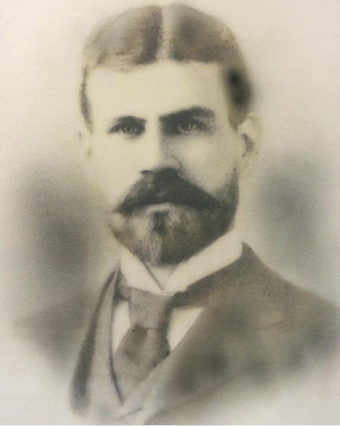

Jesse William Lazear
Induction
2018
Jesse William Lazear was born on May 2, 1866, to William and Charlotte Pettigrew. He attended Trinity Hall Military Academy in his youth. Lazear later received a formal education at Washington & Jefferson College. After attending both Johns Hopkins and Columbia, Lazear worked as a physician at Johns Hopkins Hospital, studying yellow fever and malaria. However, the bulk of his research was done while he worked for the United States Army in Quemados, Cuba. Along with Walter Reed, James Carroll, and Aristides Agramonte, he worked to study the transmission of yellow fever, later confirming the hypothesis that yellow fever was indeed spread by mosquitoes. Dedicated to his study, he allowed an infected mosquito to bite him to further investigate the disease. After contracting the yellow fever, he died on September 26, 1900, at age 34. A dormitory at Johns Hopkins University was named after him in honor of his sacrifice, as was the chemistry building at Washington & Jefferson College.
Lazear's children never knew him, but they grew up in a world free of the yellow fever disease. The head of the Yellow Fever Board, Walter Reed, said, "His death was not in vain. His name will live in the history of those who have benefited humanity." In 1929, Congress awarded the Congressional Gold Medal to the volunteers of the Yellow Fever Commission. Additionally, a gold plaque exists in Baltimore's Johns Hopkins Hospital honoring Lazear for his “courage and devotion.”